

Dr. Prachi Beriwala, Associate Professor, School of Management, Presidency University, Bangalore

“Education is not just about imparting facts—it’s about igniting minds”
In a world constantly transformed by innovation and disruption, fostering the entrepreneurial spirit among young people is no longer just a lofty ideal—it’s a necessity. As economies become more knowledge-driven and competitive, equipping students with entrepreneurial skills is emerging as a powerful way to future-proof careers, drive social change, and fuel economic growth.
But how exactly does entrepreneurial education influence the mindset and motivation of students? What factors determine whether a student exposed to entrepreneurship courses will actually choose to start a business?
A recent study published in Sustainability—titled “Entrepreneurial Education and Entrepreneurial Intentions: The Mediating Role of Personal Attitude and Perceived Behavioural Control”—provides compelling insights into this critical question. The study has been conducted among university students in India and the study uses the Theory of Planned behaviour to analyse how educational exposure to entrepreneurship influences students’ intentions to become entrepreneurs. The findings offered much more than academic insight—it provides a roadmap for educators, policymakers, and institutions eager to spark the next generation of innovators.
Why Entrepreneurial Education Matters
Entrepreneurial education refers to the structured learning of entrepreneurial knowledge, skills, and mindset, often integrated into university programs academically as well as through workshops, case studies, mentorship, and real-world projects. The primary aim is not just to produce business owners but to cultivate creativity, resilience, problem-solving, and opportunity recognition among students.
Universities are increasingly seen as base of innovation, where students should not only acquire degrees but also discover the confidence and competence to carve their own professional paths.
In India, where youth unemployment remains a concern despite high educational attainment, the need to develop job creators rather than just job seekers has never been more urgent. Entrepreneurial education could be the bridge between academic knowledge and real-world impact.
The Theory of Planned Behaviour: A Lens into Entrepreneurial Intention
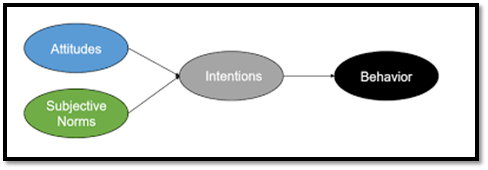
The Theory of Planned Behaviour: A Lens into Entrepreneurial Intention
A psychological framework was developed by Icek Ajzen, to unpack the connection between education and entrepreneurial action, which is called as Theory of Planned Behaviour (TPB). According to this theory, an individual’s intention to perform a behaviour—such as starting a business—is shaped by three key factors:
Personal Attitude – The individual’s overall evaluation of the behaviour, reflecting how positively or negatively they feel about engaging in it.
Subjective Norms – The individual’s overall evaluation of the behaviour, reflecting how positively or negatively they feel about engaging in it.
Perceived Behavioural Control (PBC) – The individual’s belief in their capability to execute the behaviour successfully, which also reflects perceived ease or difficulty.
The Power of Mindset and Self-Belief
Entrepreneurial education has a positive and significant effect on both personal attitude and perceived behavioural control. In turn, both of these mediators strongly influence students’ entrepreneurial intentions.
In plain terms: students who are exposed to well-designed entrepreneurship courses develop a more favourable view of starting a business and feel more capable of doing so. These psychological shifts are what lead them to seriously consider launching their own ventures.
Entrepreneurial Education as a Catalyst, not a Guarantee
While entrepreneurial education provides the necessary knowledge, skills, and exposure, it does not automatically result in entrepreneurial action. Instead, it activates the internal cognitive and emotional processes that shape entrepreneurial intention. In essence, education lays the groundwork, but the spark must come from within.
The Role of Cognitive Shifts
Effective entrepreneurial education fosters critical thinking, opportunity recognition, and problem-solving abilities. These cognitive shifts empower students to view uncertainty as opportunity and challenges as surmountable. It changes how they perceive risk, which is vital for intention formation.
Transformation of Identity
Entrepreneurial education can help students see themselves as potential entrepreneurs. This shift in identity—from student to future founder—is crucial. When learners internalize the belief that entrepreneurship is aligned with who they are and what they value, intentions become more robust and actionable.
Practical Implications for Educators and Policymakers
There are various ways to offers a roadmap for how institutions can better nurture entrepreneurial ambition:
Curriculum Design Should Focus on Experience: Theory is not enough. Students need real-world exposure through internships, incubators, and business simulations that allow them to apply concepts, fail safely, and learn by doing.
Mentorship and Role Models Matter: Inviting successful entrepreneurs to speak, mentor, or collaborate with students can enhance personal attitudes by showing that entrepreneurship is both desirable and achievable.
Building Self-Efficacy Is Key: Courses should include opportunities for students to pitch ideas, lead teams, solve problems, and reflect on their achievements. These experiences increase their perceived behavioural control.
Assessment Beyond Grades: Entrepreneurial education should assess creativity, resilience, communication, and initiative—not just exams. These competencies are more predictive of entrepreneurial success.
Tailoring to Cultural Contexts: The study, based in India, highlights the importance of aligning entrepreneurship education with local economic conditions, societal norms, and challenges.
Conclusion: Entrepreneurial education, when done right, doesn’t merely tell students what entrepreneurship is; it shows them who they can become. By shifting attitudes and building self-belief, it transforms the classroom into a launchpad for innovation.
As economies worldwide grapple with uncertainty, automation, and inequality, investing in the entrepreneurial mindset of youth could be our best bet for a more resilient, creative, and self-sustaining future.
The challenge now is for universities, governments, and educators to move beyond token courses and toward a holistic, psychologically-informed approach. If we can light that spark in enough young people, we might just witness a new generation of change-makers—ready not just to find jobs, but to create them.