
Prof. (Dr.) Javed Mohammad Iqbal, UT Level Nodal Officer Skills, Higher Education Department, UT Ladakh

Skills are a key driver of economic growth and social development in any nation. This is particularly evident in developed countries, where a significant portion of the workforce is highly skilled, contributing to sustained economic resilience and innovation. In contrast, developing and underdeveloped countries often face significant skill gaps, which hinder their economic progress and competitiveness on the global stage. For instance, Japan and Germany have skilled workforce proportions of 80% and 75% respectively, while the United Kingdom reaches 68%, and the United States stands at 52% (World Economic Forum, 2021). The proportion of formally skilled workforce in India is very low, at 4.69% (MSDE, 2020). Additionally, only about 2% of India’s employable population has received formal skill development training, indicating a critical shortage of job-ready individuals (NITI Aayog, 2022). To address this disparity, the Government of India has undertaken several initiatives notably the National Education Policy (NEP) 2020, which places a strong emphasis on integrating skill development within the education system. By 2025, the NEP targets exposing at least 50% of school students to vocational training programs (Government of India, 2020).
Studies have shown that early exposure to vocational training can significantly reduce dropout rates and pave the way for entrepreneurship and self-employment, particularly in underserved areas (World Bank, 2021). Beyond employability, skilling empowers young people by shaping personality, strengthening confidence and nurturing resilience. Amid rising mental health challenges, skill-based education is a meaningful and therapeutic engagement, enabling holistic growth and instilling a foundation for lifelong learning.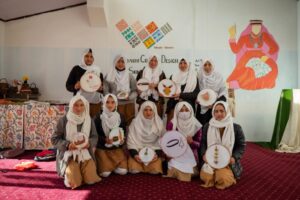
Skill development in Ladakh has recently become a key focus, with initiatives aimed at enhancing employability and addressing the region’s specific economic needs. Traditionally, vocational training was confined to Industrial Training Institutes (ITIs) and Government Polytechnic Colleges. However, the implementation of the National Education Policy (NEP) 2020 has broadened this scope, encouraging the integration of skill development into higher education institutions. Ladakh Skill Development Mission (LSDM) and the Higher Education Department have taken a novel initiative by integrating National Skill Qualification Framework (NSQF) aligned skill courses into undergraduate programme in colleges of Ladakh, making it one of the most innovative practices in the country. A total of 11 skill courses have been selected based on local relevance and future demands, covering key sectors such as tourism, handicrafts, beauty wellness, food processing, agriculture, media and IT. These courses are being conducted across 7 higher education institutions through 16 well-equipped skill centers, in collaboration with Sector Skill Councils and NIELIT. Six SSCs-Agriculture Sector Skill Council, Beauty & Wellness Sector Skill Council, Handicraft & Carpet Skill Council, Media & Entertainment Sector Skill Council, Tourism & Hospitality Sector Skill Council, FICSI and NIELIT-adapted their existing Short Term Training modules into 90-hour sub-modules to align with the University’s credit points of Four Year Undergraduate Programme under NEP 2020.
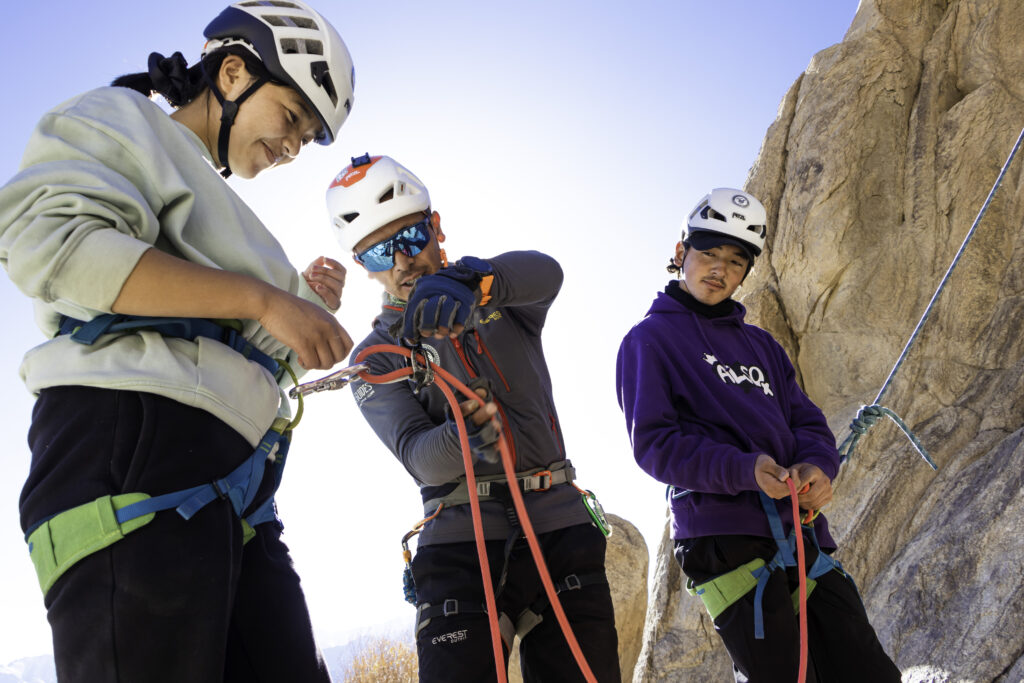
Aligned with NEP’s multiple entry-exit system, students are assessed and certified on a semester-wise basis. Since the introduction of these skill courses in 2023, over 1000 of students have successfully completed training and earned NSQF aligned NCVET certification in the job roles including Graphic Designer, Jam, Jelly and Ketchup Processing Technician, Pickle Making Technician, High Altitude Trekking Guide, Guest Service Associate, Professional Makeup Artist, Assistant Beauty Therapist, Yoga Instructor, Traditional Hand Embroiderer, and Mushroom Grower. Beyond these regular courses, the skill centers have also extended short-term training programs to non-college students under Pradhan Mantry Kaushal Vikas Yojna (PMKVY). In order to ensure students get proper exposure and remain competitive, students are actively encouraged and supported for participation in India Skill Competitions.
Ladakh’s skill development initiative being conferred with the Innovation Award 2024 by the Centre for Innovations in Public Systems (CIPS), Hyderabad, is a national acknowledgment of its effective integration of skilling with education in alignment with the National Education Policy (NEP).