
Dr. Radhika Srinivasan, Principal, Suchitra Academy

In an era defined by accelerating climate disruption, unprecedented biodiversity loss, and the measurable degradation of our planet’s most vital ecosystems, the integration of environmental consciousness into education is no longer a pedagogical preference — it is, by every credible measure, an urgent imperative. As renowned environmentalist David Orr argued with characteristic directness, “All education is environmental education. By what is included or excluded, we teach students that they are part of or apart from the natural world.”
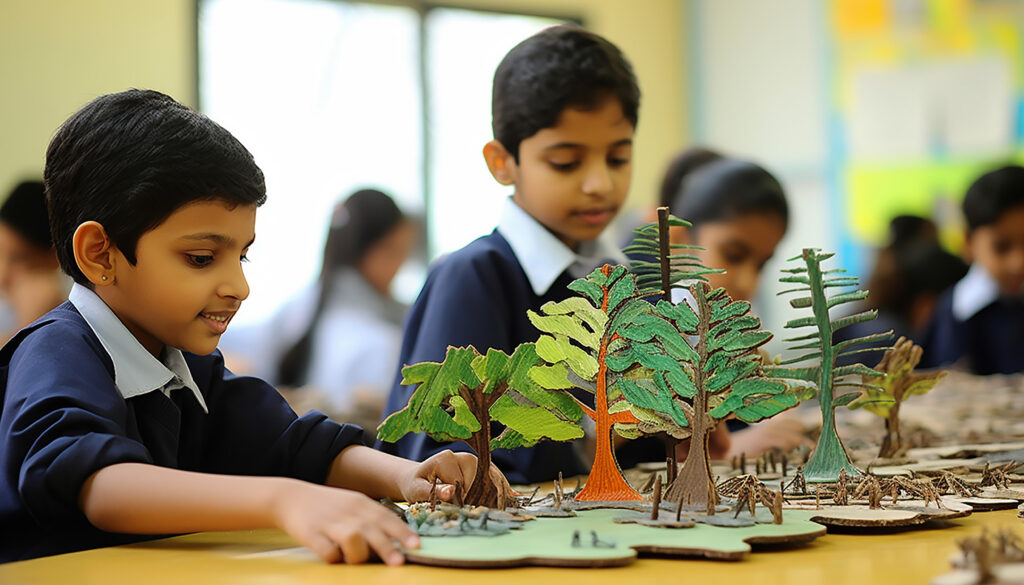
For too long, environmental education has occupied the periphery of formal schooling – surfacing, intermittently, as an isolated science unit or a seasonal awareness campaign. This fragmented approach fundamentally fails to reflect the scale or complexity of the ecological challenges students will inevitably inherit. “Greening the curriculum,” by contrast, represents a systemic, interdisciplinary commitment to embedding environmental literacy across all subject areas and year levels.
The research supporting this approach is both substantial and compelling. A landmark meta-analysis published in the Journal of Environmental Education found that students engaged in sustained, cross-curricular environmental education demonstrated significantly stronger critical thinking capacities, greater civic participation, and a markedly heightened sense of personal agency. These are not incidental outcomes — they are precisely the competencies that 21st-century learning frameworks, including those articulated by UNESCO’s Education for Sustainable Development (ESD) initiative, identify as foundational to future-ready education.

Thought leaders in the field have long advocated for this paradigm shift. Richard Louv, author of Last Child in the Woods and pioneering architect of the “nature-deficit disorder” concept, states with compelling clarity that “the future will belong to the nature-smart — those individuals, families, businesses, and political leaders who develop a deeper understanding of the transformative power of the natural world.”
For educators, this is not merely an inspiring sentiment — it is a measurable, evidence-supported framework for understanding what genuinely future-ready graduates look like.
Practically speaking, greening the curriculum does not necessitate the dismantling of existing frameworks. It requires, rather, their conscious expansion — asking, at every juncture: how does this content connect students to environmental realities, responsibilities, and possibilities?
The call to action is clear: educators, school leaders, and curriculum designers must now move beyond awareness and into intentional, measurable integration. Professional development, resource allocation, and institutional policy must all reflect the recognition that environmental consciousness is not supplementary to quality education — it is quality education.
The students in our classrooms today are the decision-makers of tomorrow. The curriculum we offer them is, ultimately, the future we are choosing to build.