

Salomi Shah, Founder of Global Early Years Teacher’s Training Institute

The landscape of early childhood education is undergoing a profound transformation, driven by the integration of gamification and differentiated instruction. These pedagogical innovations are not only enhancing engagement and motivation but are also ensuring that learning is accessible and meaningful for every child, regardless of their geographical or socio-economic context.
Defining Gamification and Differentiated Education
Gamification refers to the application of game design elements—such as points, badges, levels, and leaderboards—to non-game educational settings, transforming passive learning into an interactive, dynamic, and rewarding experience. Differentiated education involves tailoring instruction, content, and assessment to meet the diverse needs, interests, and abilities of individual learners, ensuring equity and engagement in the classroom.
The Science Behind the Approaches
Why Gamification Works
Research demonstrates that gamification taps into intrinsic motivation, fostering sustained attention and deeper learning. Game-based learning (GBL) leverages the natural curiosity and playfulness of young children, supporting cognitive, social, and emotional development. For example, digital games like Minecraft encourage creativity and problem-solving, while interactive programs such as Sesame Street enhance early literacy and numeracy. Even non-digital games—puzzles, scavenger hunts, and board games—cultivate critical thinking and collaboration, especially where technology access is limited.
Infographic: Gamification Impact on Early Learning Outcomes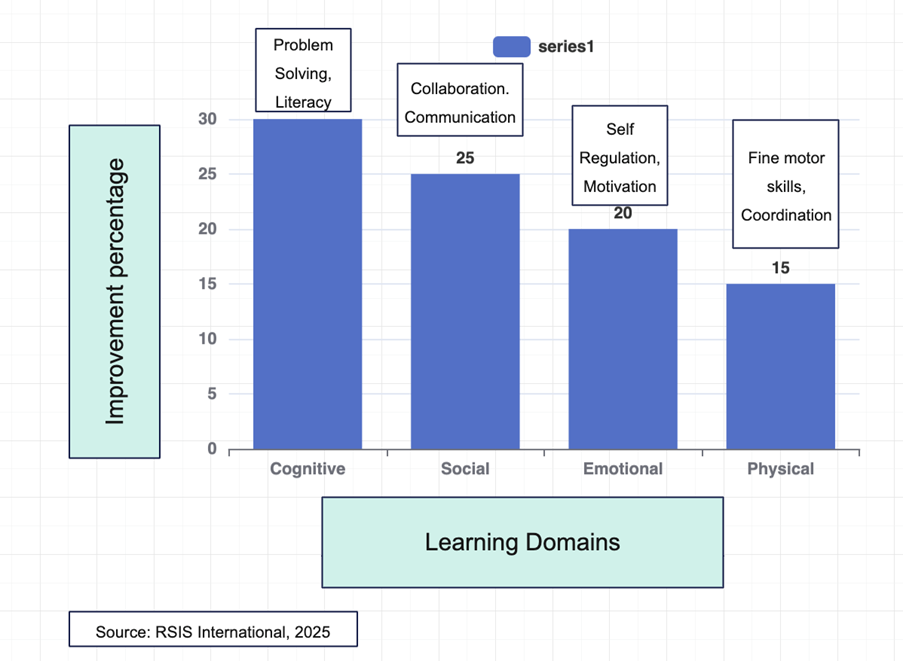
Differentiation: Meeting Every Child Where They Are
Differentiated instruction recognizes that no two children learn the same way. By varying the content (what is taught), process (how it’s taught), product (how learning is demonstrated), and environment (learning setting), educators can address the full spectrum of learners—across languages, cultures, abilities, and interests. Flexible grouping, multi-sensory activities, and learning centers are key strategies, allowing children to engage at their own pace and according to their preferred learning style.
Diagram: The Differentiation Cycle in Early Years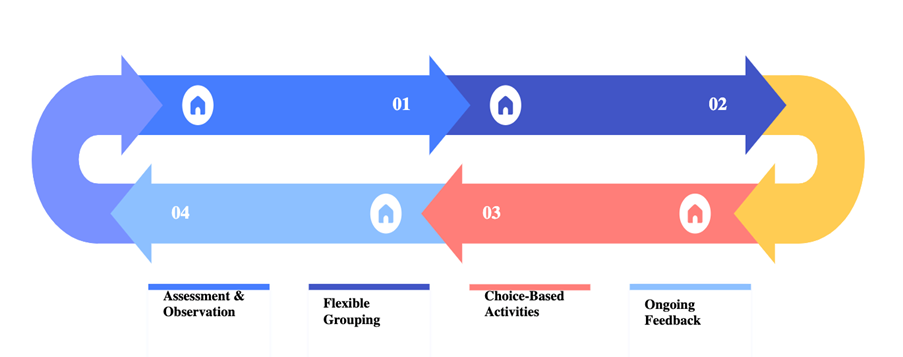
Each stage supports personalized learning and continuous growth.
Implementation in Rural and Urban Settings
Urban Classrooms: Leveraging Technology
Urban schools often benefit from better connectivity and access to digital resources. Here, educators can implement:
- Digital Escape Rooms: Interactive puzzles that challenge students to solve problems collaboratively.
- Kahoot!, Quizzez, Boklet, Quizlet, Gimkit and Classcraft: Game-based quiz platforms that reward participation with points and badges.
- Learning Apps: Duolingo, Minecraft Education Edition, Scratch, Kodable, Khan Academy Kids, and The Robot Factory for language, creativity and STEM skills.
Rural Classrooms: Harnessing Offline and Low-Tech Solutions
In rural or resource-constrained environments, gamification and differentiation remain highly effective through:
- Traditional Games: Board games, puzzles, and scavenger hunts that foster literacy, numeracy, and social skills without the need for internet access. Action, roleplaying, sports, survival games, kabaddi, Kho kho, galli danda, lagori. Kite, flying, tag, games with natural materials, swimming, spinning top, dodgeball, Hopscotch, London Statue, Vish Amrit, Raja Manti Chor Sipahi, Cricket, Ludo, Antakshari, Bandi, Carrom, Chess, Chinese Checkers, Croquet, Dominoes, Gonggi, Herling, Kendama, Knuckle bones, La Loteria, Mahjong, Makruk, Mancala, Metball, Palo sebo, Petanque, Sepak, Takraw, Sepa, Skittles, Snooker, Solitaire, Table tennis, Tiddlywinks, Whot, Woch, Yut Nori
- Physical Learning Centers: Rotating stations of math, science, arts and crafts, music, gym, fine motor and gross motor, speech and drama, aesthetic, skills, life skills – with materials (blocks, art supplies) tailored to different skill levels and different levels of difficulty.
- Peer Grouping: Mixed-ability teams encourage peer teaching and collaboration, bridging gaps in teacher resources.
Global Evidence of Positive Impact
Research Highlights
- A qualitative study in Zimbabwe found that both digital and traditional game-based learning significantly improved holistic development—cognitive, social, emotional, and physical—across rural and urban early childhood centers.
- Differentiated instruction in international preschools has led to increased engagement, confidence, and milestone achievement, as children are empowered to make choices and learn at their own pace.
- Gamified environments in rural higher education have increased motivation, inclusivity, and digital literacy, helping bridge educational divides.
Practical Examples for Immediate Adoption
- Digital Scavenger Hunts: Use smartphones or simple printouts to create treasure hunts that teach counting, vocabulary, or environmental awareness.
- Choice Boards: Offer a menu of activities (drawing, building, storytelling) so children select how to demonstrate understanding.
- Peer-Led Games: Older students or advanced learners facilitate games for younger peers, reinforcing their own skills while supporting others.
- Leverage Local Context: Customize games and challenges to reflect local culture and issues for greater relevance.
Gamification in Traditional Rural and Modern Urban Classrooms
Gamification can be a powerful strategy to enhance engagement and learning outcomes in both traditional rural and modern urban educational settings. Here’s how teachers can integrate gamification, followed by 50 examples of apps and platforms suitable for diverse contexts.
How Teachers Can Include Gamification
In Traditional Rural Settings
- Offline and Low-Tech Games: Use card games, board games, and physical activity-based competitions to reinforce concepts.
- Mobile-Based Apps: Leverage widely available smartphones for quiz-based learning, even with limited internet.
- Community Challenges: Organize classroom or village-wide learning competitions with rewards and recognition.
- Storytelling Quests: Use local stories and folklore as the basis for quests and missions.
- Rewards and Badges: Create physical badges or certificates for achievements.
In Modern Urban Settings
- Digital Platforms: Utilize high-speed internet and smart devices for interactive, multimedia-rich gamified lessons.
- Real-Time Quizzes: Use apps for instant feedback and leaderboards.
- Collaborative Online Games: Enable students to work in teams on virtual projects and challenges.
- Augmented Reality (AR) and Virtual Reality (VR): Implement immersive simulations for experiential learning.
- Integration with LMS: Sync gamified activities with learning management systems for tracking progress and analytics.
50 Gamification Apps and Platforms for Teachers
Here are 50 gamification tools, suitable for both rural and urban classrooms. Many offer offline or low-bandwidth modes, making them adaptable to varied environments:
# | App/Platform Name | Description/Use Case |
1 | Kahoot | Quiz-based games, live or self-paced |
2 | Gimkit | Game-show style quizzes with virtual rewards |
3 | Quizlet | Flashcards, games, and competitive Quizlet Live |
4 | Pear Deck | Interactive presentations with real-time feedback |
5 | Classcraft | RPG-style classroom management and learning quests |
6 | Duolingo | Language learning through gamified lessons |
7 | Prodigy | Math games in a fantasy world |
8 | ClassPoint | Adds gamification to PowerPoint lessons |
9 | Quizizz | Multiplayer quiz games, homework assignments |
10 | Nudge | Microlearning and habit-building with gamified elements |
11 | Blooket | Customizable quiz games with various modes |
12 | Socrative | Real-time quizzes and instant feedback |
13 | Edmodo | Classroom management with badges and rewards |
14 | Seesaw | Student portfolios, activities, and feedback loops |
15 | GoNoodle | Movement and mindfulness games |
16 | Brainscape | Adaptive flashcards with gamification features |
17 | Quizalize | Quizzes with live leaderboards and analytics |
18 | Flipgrid | Video-based discussions and challenges |
19 | Nearpod | Interactive lessons, VR, and quizzes |
20 | Mentimeter | Polls, quizzes, and interactive presentations |
21 | Plickers | Paper-based clickers for real-time quizzes (great for low-tech) |
22 | Formative | Interactive assignments with instant feedback |
23 | Google Classroom | Assignments with gamified add-ons |
24 | Microsoft Teams | Integrates quizzes and badges |
25 | Edpuzzle | Video lessons with embedded questions |
26 | Padlet | Collaborative boards with gamified challenges |
27 | Remind | Communication and reward systems |
28 | Schoology | Gamified LMS with badges and points |
29 | Tynker | Coding games and challenges for kids |
30 | Minecraft: Education Edition | Game-based learning in a virtual world |
31 | Scratch | Coding and interactive stories/games |
32 | Code.org | Coding challenges with badges and progress tracking |
33 | BrainPOP | Animated educational games and quizzes |
34 | Epic! | Reading platform with gamified progress |
35 | Trello | Project-based learning with gamified boards |
36 | Slack | Team challenges and integrations with gamified bots |
37 | ClassDojo | Classroom management, behavior tracking, and rewards |
38 | Google Forms | Quizzes with instant feedback and leaderboards |
39 | Poll Everywhere | Live polls and competitions |
40 | FlipQuiz | Game-show style quiz platform |
41 | TinyTap | Create and play interactive educational games |
42 | Explain Everything | Interactive whiteboard with collaborative games |
43 | BookWidgets | Create interactive exercises and games |
44 | GoFormative | Real-time formative assessment with gamified elements |
45 | Edulastic | Online assessments with badges and progress tracking |
46 | Kahoot! Jumble | Kahoot mode for sequencing and ordering tasks |
47 | Quizlet Live | Team-based competitive quiz mode |
48 | Classcraft Quests | Story-based learning adventures |
49 | Minecraft: Education Quests | Structured learning missions in Minecraft |
50 | Blockholm | Minecraft-based urban planning and design game |
Tips for Effective Gamification
- Adapt to Connectivity: Choose apps that work offline or with minimal data for rural areas.
- Blend Digital and Physical: Use physical rewards or paper-based games alongside digital tools.
- Foster Collaboration: Many platforms support team play, which builds community and social skills.
- Monitor Screen Time: Especially in rural settings, balance digital activities with outdoor or physical games.
- Leverage Local Context: Customize games and challenges to reflect local culture and issues for greater relevance.
Gamification can bridge gaps in engagement and achievement across diverse educational settings, making learning more interactive, motivating, and fun for all students.
Conclusion: The Future is Playful and Personalized
Incorporating gamification and differentiated education in early years is not a luxury—it is a necessity for equitable, high-quality learning in 2025 and beyond. Whether in the heart of a bustling city or a remote rural village, these approaches empower every child to thrive, laying a robust foundation for lifelong learning and adaptability in a rapidly changing world.